Biography
Christine Wiersema is a sculptor and visual artist whose work is rooted in intuition, symbolism, and a lifelong search for meaning beneath the visible surface of life.
She was raised in a strict family environment marked by silence, discipline, and unspoken histories, shaped by parents who had lived through war. This early atmosphere of restraint and emotional depth later became an undercurrent in her artistic language.
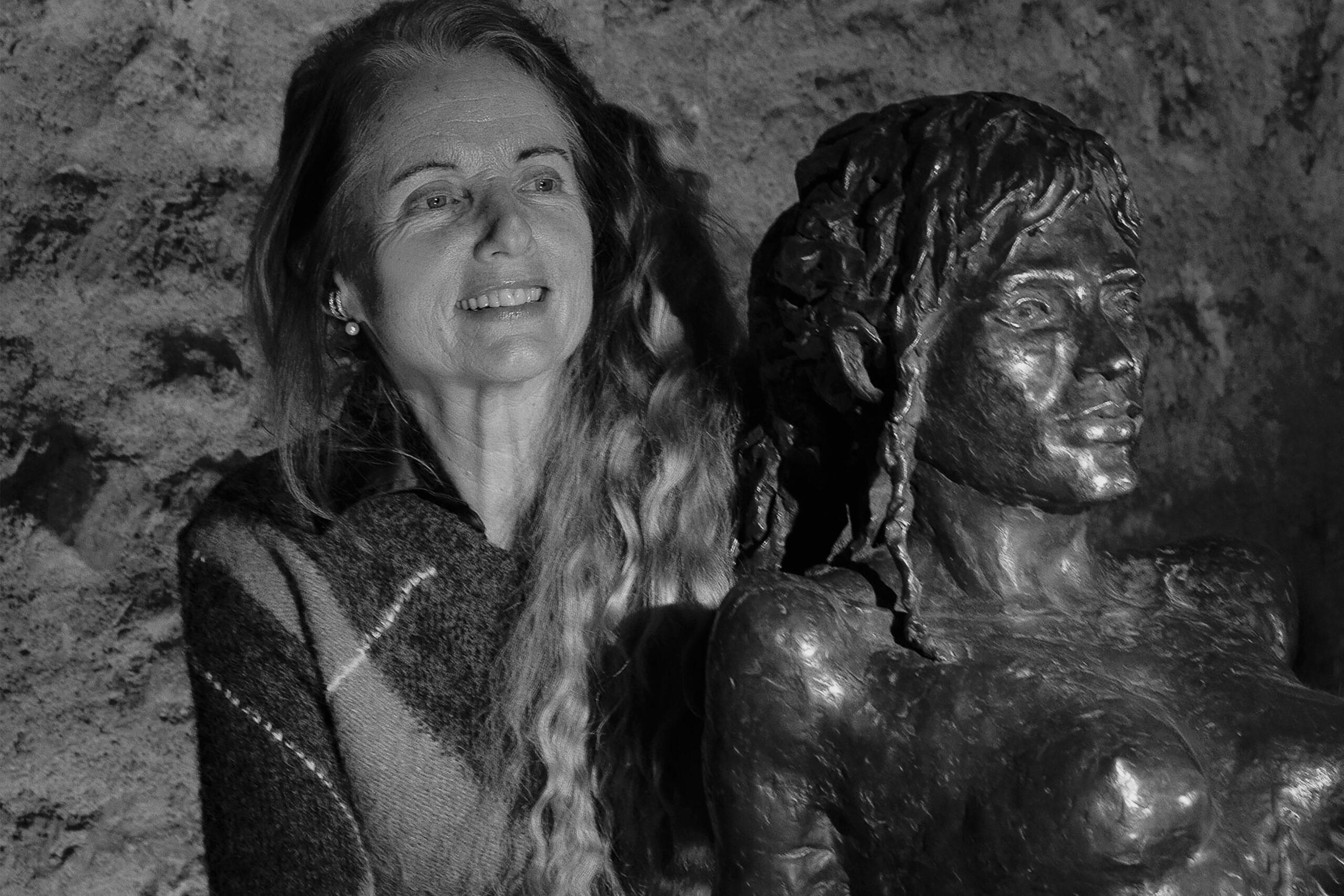
Christine Wiersema
As a teenager, Christine left home at a young age and moved to Amsterdam. There, she encountered a painter who introduced her to the world of visual art. She began taking painting classes and soon discovered that her strength lay in the combination of color and atmosphere. Her early work developed into a romantic realist style, and she exhibited in several galleries. Over time, her focus shifted toward the human figure, although her true attraction always lay in creating mysterious and atmospheric spaces on canvas.
While continuing her artistic development, Christine worked for many years in psychiatric care. She trained as a psychiatric nurse and sociotherapist, a professional path that profoundly shaped her understanding of the human psyche. Through therapy, self-reflection, and close work with vulnerable individuals, she learned to see beyond behavior and to recognize fear, trauma, longing, and the shadow aspects of the self. These insights became inseparable from her artistic practice.
A transformative phase began when she enrolled in a formal education to become a drawing teacher. This step opened an entirely new world and felt like a long awaited homecoming. Surrounded by easels, large sheets of paper, charcoal, and erasers, she awaited the arrival of the nude model. It was as if she could breathe again, her thoughts focused and her hands ready to create. From learning perspective and applied design to making her first bronze sculpture, a small figure with a pregnant belly, she experienced a deep sense of happiness, pride, and belonging.
Within a year of study, she began to truly absorb the tarot. Her background in psychiatric care, combined with her intuition, allowed her to approach tarot as a symbolic language that makes the invisible visible—philosophical and psychological imagery offering insight into emotions, inner processes, and lived experience.
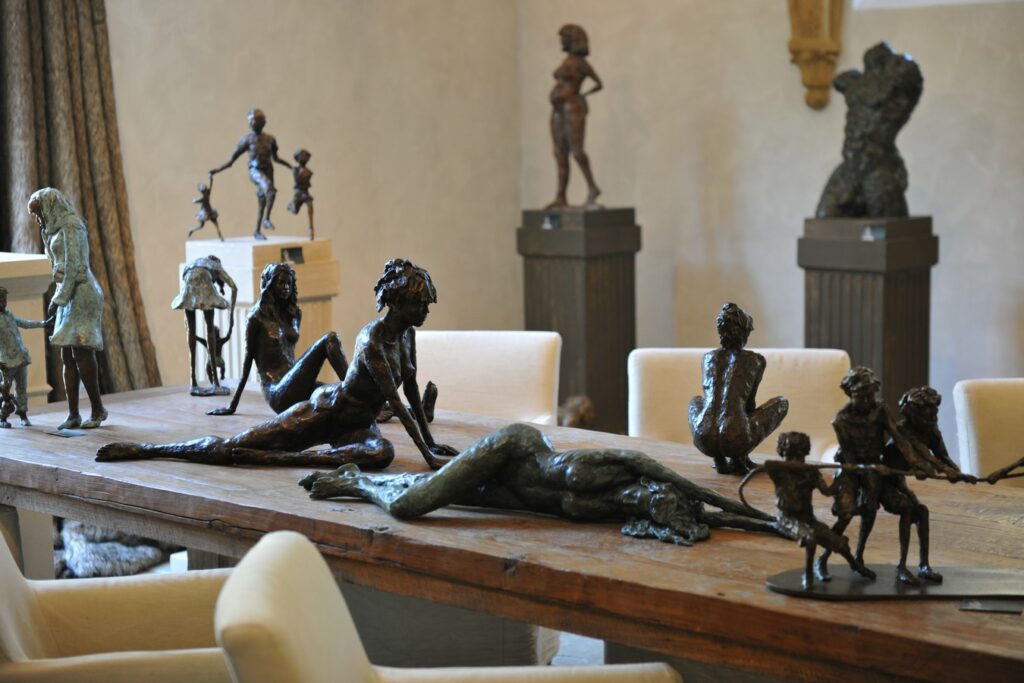
Christine later met her husband, moved from Amsterdam to Rotterdam, married, and became a mother of two children. Around this time, her artistic path gradually led her from painting to sculpture after attending a sculpting class. She continued taking classes and sculpting for over twenty-five years in bronze, developing portraits, figures, and small angel sculptures.
Creating with her hands, emptying her thoughts, and keeping her eyes focused on planes, lines, structure, and the overall composition while working with clay or wax was deeply fascinating. It was challenging, demanded concentration, and carried a sense of hope. Her happiness lay in the discovery that she knew how to create. It felt as though an artistic door had been opened. She had never imagined that she could sculpt a portrait of a child or a dancing figure. Through sustained practice and creation, this eventually led to her first solo exhibition at home.
She stopped painting with oil and divided her time between her family and the creation of small angel sculptures. Yet even while sculpting, Christine missed the interaction present in her earlier work: the analyzing, integrating, and mental engagement of creative thought. She felt a longing to go deeper.
This longing led her to a new and extensive tarot education in Nijmegen. Over the course of three years, she studied tarot, astrology, esoteric numerology, and Kabbalah as part of a professional training program to become a certified tarot practitioner. Christine worked professionally with tarot for many years, teaching and guiding others through inner processes. She approached tarot not as fortune-telling, but as a tool for insight, reflection, and transformation. This period played a key role in the development of her voice and her understanding of the shadow within each person as an essential part of creative identity.
A new phase began when Christine moved with her family to France, where they renovated a château in the south of the country. There, she continued sculpting, began teaching sculpture, organized exhibitions, and opened a gallery at home. Her sculptures were exhibited nationally and internationally and entered private collections in Switzerland and more than a dozen other countries.
After a profound spiritual experience, her work entered a new phase. This marked the emergence of The Major Arcana: a sculptural interpretation in bronze of the twenty-two Major Arcana tarot archetypes. Christine creates these figures from a deeply spiritual necessity. Each sculpture embodies an archetypal stage of human consciousness—transformation, shadow, rebirth, power, vulnerability, and becoming. They are not illustrations, but manifestations: symbolic presences that invite contemplation and inner dialogue.
Exhibitions
Exhibitions of Sculpture and Oil paintings
Netherlands, 1983 – 2007
Sculpture Exhibitions
Europe, 2009 – 2021
Accepted member of the ‘Sculptors Guild’ as a Bronze Sculptor
New York City, USA, 2021